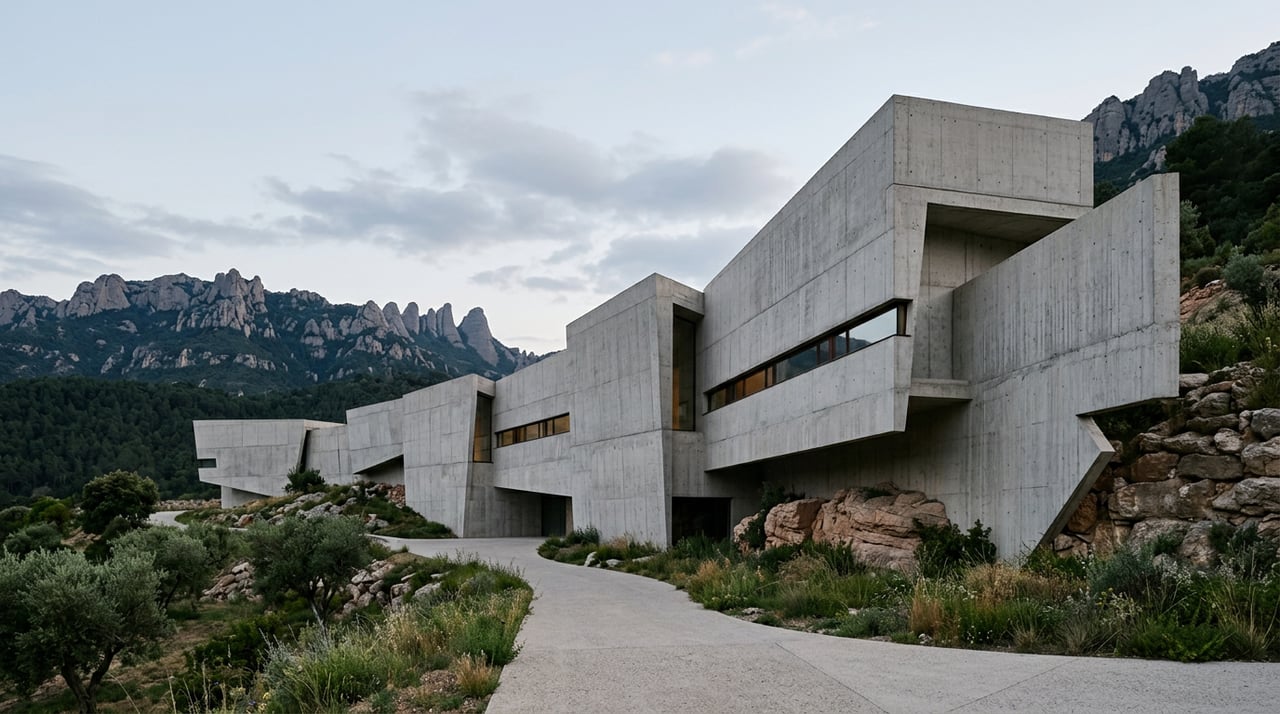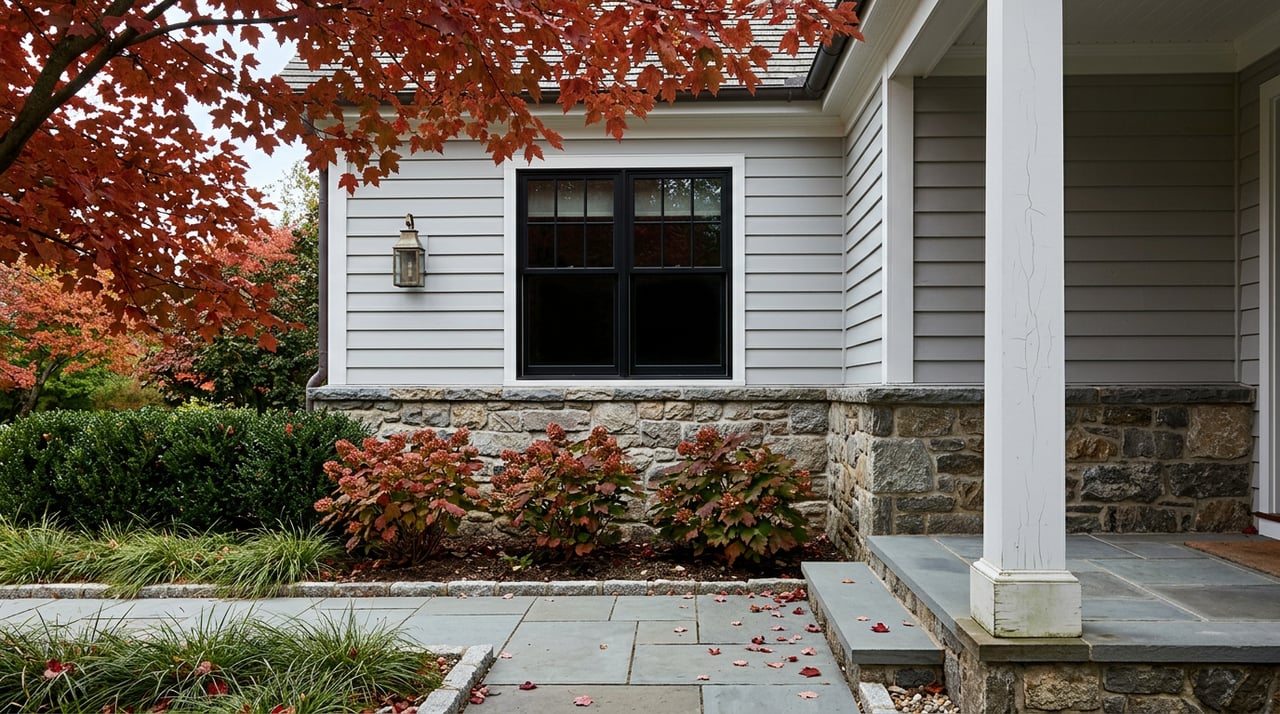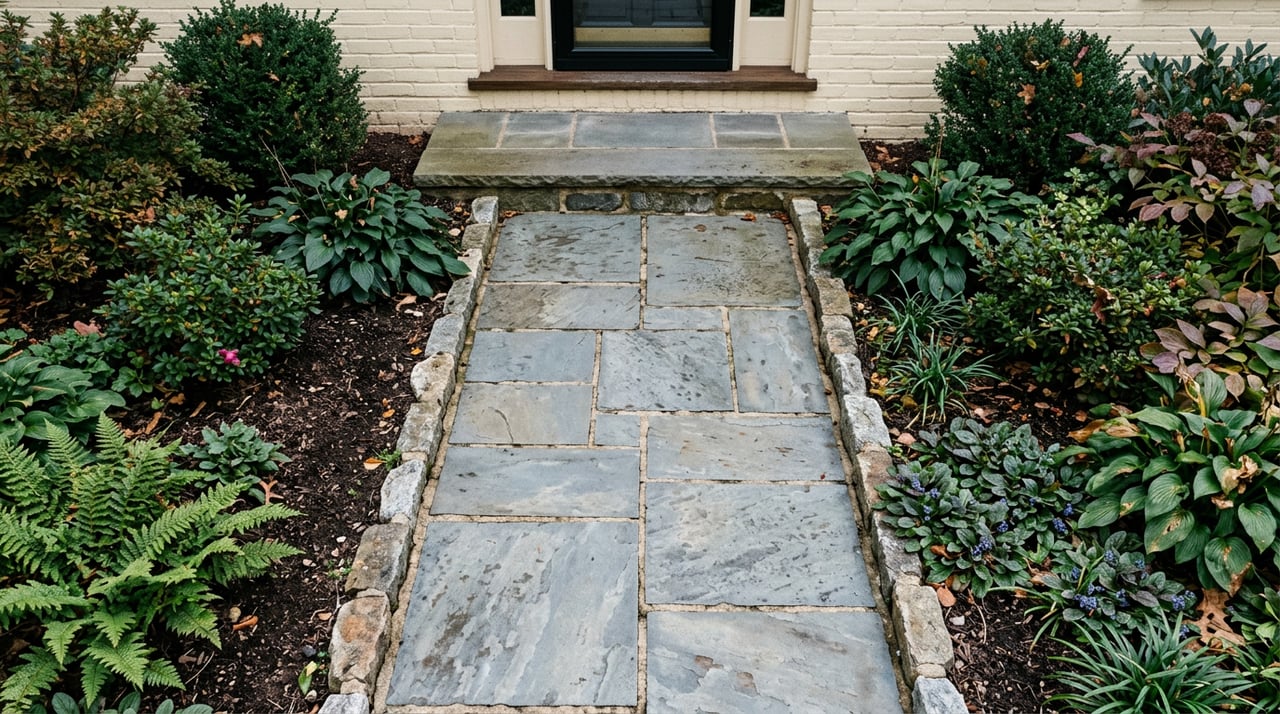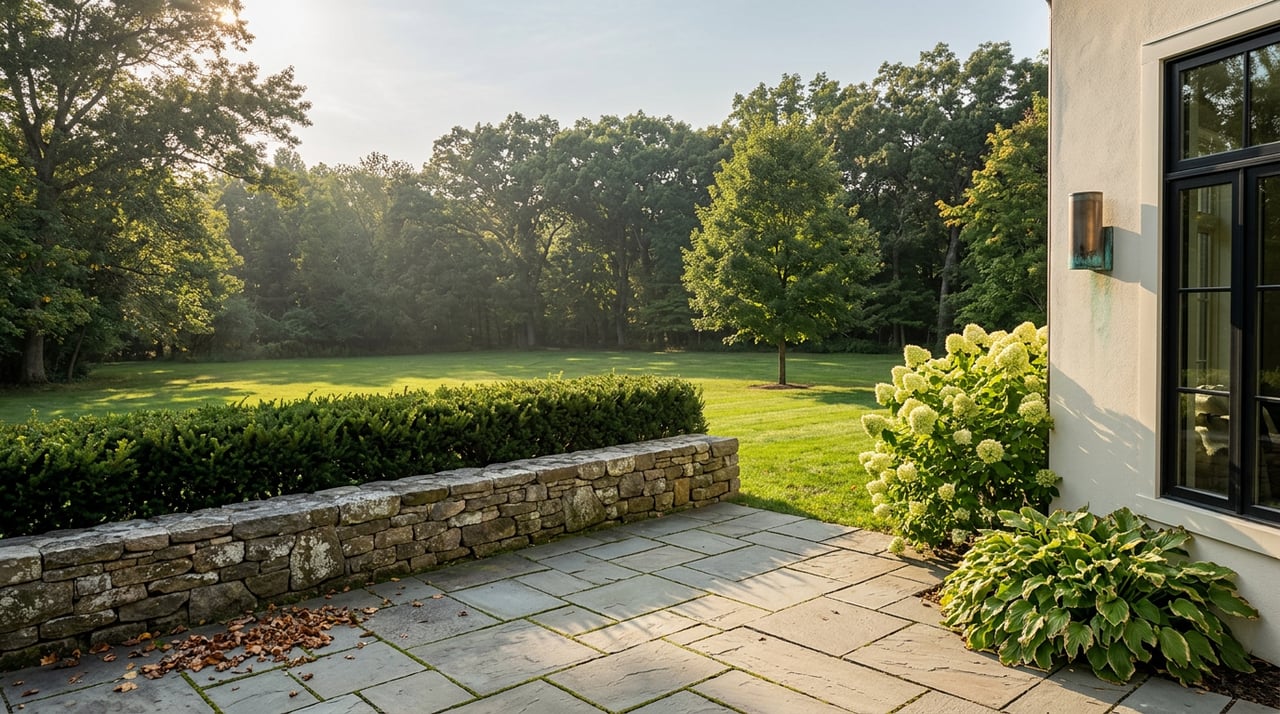
A buyer we'll call typical for this market puts an offer in on a five-acre lot in Harding Township's RR zone, envisions a pool, a pool house, a regulation sports court, and a wider motor court off the existing driveway, and assumes five acres is plenty of room for all of it. Then the survey comes back, the zoning application goes in, and the math says otherwise. The lot is five acres. The buildable footprint for everything hard-surfaced on it, driveway included, is a fraction of that.
This is the detail that the headline numbers on any portal never show you, and it matters more in Harding Township than almost anywhere else in Morris County, because Harding's whole identity as a market rests on large lots that turn out to have surprisingly small limits on what you can put on them.
The lot size isn't the space you get to use
Harding's residential zoning schedule sets a five-acre minimum lot size in the RR (Rural Residential) zone and a three-acre minimum in R-1, with a 300-foot minimum frontage and a 100-foot minimum setback on the front, side, and rear yards in both zones. That's the part most buyers already know, because it's the reason Harding reads as horse country rather than a subdivision.
What catches people off guard is the coverage math layered on top of it. The township's building-area limitation is not a flat percentage. It shifts based on how far back from the road your structures sit: a 3 percent cap applies when structures are within 150 feet of the front lot line, and a 4 percent cap applies once everything sits at least 150 feet back. On a five-acre lot, that difference between 3 and 4 percent is roughly 2,178 square feet of additional buildable area, which is the size of a small guest house.
And "buildable area" in Harding's code is broader than most buyers expect. Lot coverage isn't just the house and garage. It includes driveways, parking aisles, sidewalks, patios, pool decks, and recreation courts. Every hardscaped surface on the property competes for the same percentage cap. A buyer who plans a pool, a court, and a circular motor court on a five-acre RR lot may find that the driveway alone eats a meaningful share of what the code allows before the pool ever gets drawn.
| Zone | Minimum Lot Size | Minimum Frontage | Minimum Setback | Coverage Cap |
|---|---|---|---|---|
| RR (Rural Residential) | 5 acres | 300 ft | 100 ft (front, side, rear) | 3% within 150 ft of road, 4% beyond |
| R-1 | 3 acres | 300 ft | 100 ft (front, side, rear) | 3% within 150 ft of road, 4% beyond |
There's a partial escape hatch for larger parcels. Harding's ordinance allows lot-averaged subdivisions in the RR zone, where individual lots can go as small as three acres provided the overall development density averages at least five acres per residential lot across the tract. That provision exists to let a landowner subdivide without every resulting parcel hitting the full five-acre minimum, but it also means two neighboring five-acre-zoned properties can have very different actual lot sizes depending on how and when they were created.
Trees are part of the zoning math too
Harding also runs tree-conservation rules across all of its residential districts, and they apply regardless of which zone you're in. Removing a tree six inches or greater in diameter requires a permit, and the ordinance protects a buffer of 50 feet along road frontages and 25 feet along other property lines where those removals are restricted. If a replacement is required, the code generally calls for one new tree per tree removed.
For a buyer weighing a new driveway alignment, an expanded lawn, or a pool installation on a wooded lot, this isn't a formality. It's a scheduling and design constraint that shows up before a shovel goes in the ground, and it stacks directly on top of the lot-coverage cap. A property with mature tree cover along its frontage effectively has less flexibility than the raw acreage suggests, twice over: once from the buffer restriction, and again from the coverage math.
There's one piece of relief for older estates. Harding's code gives some flexibility to accessory structures built before 1945, which can be excluded from building-area calculations as long as they haven't been enlarged or relocated. Given how much of Harding's housing stock includes century-old barns and outbuildings, this exclusion matters more here than in newer-built towns, and it's worth confirming during due diligence rather than assuming a structure counts against you.
Why the median price is the wrong number to anchor on
Here's where the zoning story connects to the price story. Harding is not a high-volume market. As of August 11, 2026, active inventory across the entire township sat at just seven listings, with a median list price around $2.1 million. That is not a typo or a seasonal lull. Harding routinely trades in the single digits of active listings at any given time, because the same zoning rules that limit lot coverage also limit how much land can be subdivided into new inventory in the first place.
Over the twelve months from March 2025 through February 2026, Garden State MLS data put Harding's median sale price at roughly $1.85 million, up 3.8 percent year over year, with homes averaging 42 days on market. That's a reasonably healthy, if unremarkable, picture on its face.
But go back one year further and the story gets stranger. Aggregator data drawing on listings feeds put Harding's typical listing price in July 2025 at $1.4 million, described as a 45.9 percent drop from the year before. A near-46 percent swing in either direction in a market this size isn't a market signal. It's what happens when a handful of transactions define the "median" for an entire month. If two or three lower-priced homes happen to close in a given window, the number falls off a cliff. If a couple of high-acreage estates close the next quarter, it snaps back up. Buyers and sellers comparing Harding to neighboring towns on the strength of a single month's median are comparing noise, not trend.
This is also why price-per-acre tells a more honest story than price-per-listing here. Land-only parcels in Harding have been listed at an average of roughly $499,000 per acre, while properties that combine a house with the land beneath it have carried an average cost closer to $727,000 per acre, with average listing prices for those house-and-land combinations running north of $3 million. The gap between those two figures is the value the market places on an existing, code-compliant structure, which in a town this constrained by lot coverage and setback rules is worth more than the raw dirt.
What this means if you're cross-shopping Harding
If you're comparing Harding against Mendham, Bernardsville, or the estate sections of Chatham Township, the median sale price is a weak basis for comparison because each of those towns runs its own zoning schedule with its own minimums, setbacks, and coverage math. A $1.85 million median in Harding and a similar median somewhere else can represent very different amounts of usable, buildable land once you account for what each town's code actually permits.
The more useful comparison is what a given acreage lets you build once setbacks, coverage caps, and tree buffers are subtracted from the total. Areas near the Great Swamp National Wildlife Refuge and along Meyersville Road carry some of Harding's most sought-after multi-acre parcels, and New Vernon's village center, with its historic general store and church, anchors the township's only real concentration of commercial activity. The rest of Harding, including Green Village and the unincorporated areas that border Morristown and Basking Ridge, is built almost entirely around large residential parcels governed by the same RR and R-1 rules described above.
One local landmark makes the point well. Glen Alpin, the Gothic Revival villa built in 1847 on more than nine and a half acres at the corner of Mount Kemble Avenue and Tempe Wick Road, is township-owned property, and its scale is a reminder of what Harding's zoning was originally built to preserve: large, mostly undeveloped estate parcels rather than densely built ones. That's the character the current code protects, and it's also the reason inventory here stays thin and coverage math stays tight.
A few questions worth asking before you write an offer
Does the lot coverage cap only apply if I'm planning new construction? No. It applies to any application for a subdivision, site plan, or building permit, which means additions, pools, sports courts, and even driveway expansions on an existing home can trigger a coverage review.
What if the property has an old barn or outbuilding? Structures built before 1945 may be excluded from the building-area calculation, but only if they haven't been enlarged or relocated since. Confirm the history of any accessory structure with the township before assuming it doesn't count against your coverage limit.
Can a five-acre RR lot ever be subdivided into smaller parcels? Yes, through the lot-averaged subdivision provision, which allows individual lots as small as three acres provided the overall tract still averages five acres per residential lot. This is why lot sizes within the same zone can vary more than buyers expect.
Harding's acreage is real. What you're allowed to do with it is a separate question, and one the median price never answers. If you're weighing Harding against another Morris County town, or trying to figure out what a specific parcel here would actually let you build, Godby Realtors can walk through the zoning math with you before you're deep into a contract, not after.