Trying to decide between a single-family rental and a small multi-family in Monmouth County? You are not alone. Investors here face coastal risks, high property taxes, and very different tenant patterns between shore towns and inland suburbs. In this guide, you will learn how the two options compare on cost, cash flow, management effort, risk, and exit strategies so you can match a property type to your goals. Let’s dive in.
What sets Monmouth County apart
Monmouth County blends suburban neighborhoods with lively shore communities like Asbury Park and Long Branch. That mix creates steady demand near commuter corridors into NYC and Newark, with more seasonality closer to the beach. Your expected rent, turnover, and vacancy will vary by town and proximity to transit, employment hubs, and amenities.
New Jersey’s property taxes are among the highest in the country. Municipal rates vary across Monmouth County, so two similar homes can yield very different net cash flow. Always model taxes per property using local assessments.
Parts of the county face coastal flood risk. Properties inside FEMA flood zones often require flood insurance for financing, and premiums can be significant. Shore municipalities may also have added permitting or seasonal occupancy rules. Zoning and local landlord-tenant ordinances differ by town, which affects what you can do with a property and the level of routine inspections.
Acquisition costs and financing basics
You will encounter similar line items at purchase whether you buy a single-family home or a small multi-family (2 to 4 units):
- Purchase price
- Closing costs such as attorney fees, title insurance, recording, and mortgage fees
- New Jersey realty transfer fees
- Prorated property taxes and any HOA dues
- Initial repairs or cosmetic updates identified during inspection
- Insurance premiums, including flood coverage if applicable
- An emergency reserve budget, often planned at 3 to 6 percent of the purchase price per year
Financing often shapes your outcome as much as the purchase price.
- Single-family homes offer a wide range of loan options, including investor-oriented conventional loans and owner-occupied programs. Investor loans typically require stronger credit and higher down payments than owner-occupied loans.
- Two to four unit properties can qualify for residential financing when owner-occupied, including FHA options. For non-owner investors, many lenders underwrite these buildings based on property income, using metrics like debt service coverage ratio. Down payments and rates can be stricter than for a one-unit investor loan.
- Five units or more generally require commercial financing with different terms.
Local factors matter. Higher Monmouth County taxes increase carrying costs. Coastal exposure can increase insurance and may require flood coverage. Older housing stock can mean electrical upgrades, lead paint considerations, or older heating systems, so plan for capital work.
Illustrative numbers: how it pencils
To see how financing, taxes, and expenses change results, consider two simple examples. These are illustrative scenarios for explanation only. Actual results depend on your specific property, rates, taxes, and rents.
Scenario A: Single-family rental
- Purchase price: $500,000; down payment 25 percent ($125,000)
- Annual rent: $36,000; vacancy 6 percent; operating expenses 40 percent of rent
- Net operating income: $19,440; estimated annual debt service: $22,500
- Cash flow before tax: negative $3,060; cash-on-cash: about negative 2.45 percent
Scenario B: Two-unit building
- Purchase price: $650,000; down payment 25 percent ($162,500)
- Annual rents: $48,000; vacancy 6 percent; operating expenses 45 percent of rent
- Net operating income: $23,520; estimated annual debt service: $29,250
- Cash flow before tax: negative $5,730; cash-on-cash: about negative 3.53 percent
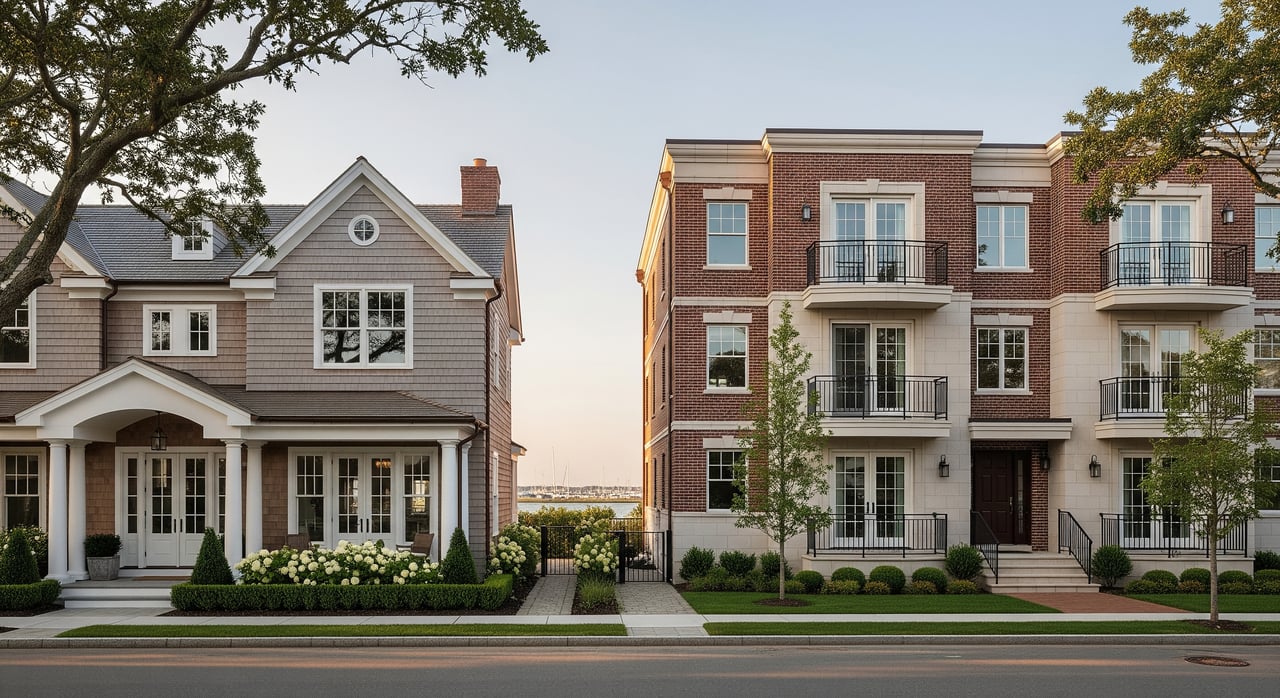
In both examples, cost of capital and operating expenses drive the result. A two to four unit often produces higher total rent and spreads vacancy risk across units, but it can come with higher purchase price, taxes, and management intensity. If you live in one unit and secure owner-occupied financing, the payment can be lower, which may flip results closer to or into positive territory.
Cash flow and risk: what to expect
Vacancy risk works differently by property type. In a single-family home, one vacancy means 100 percent of rental income stops until the home is re-leased. Vacancies can last longer, but single-family tenants often stay longer. In a small multi-family, losing one tenant reduces income but not all of it, which can stabilize cash flow.
Rent growth can vary by segment. Well-located single-family homes can command premium rents due to limited supply and demand from households seeking space and yards. Multi-family rents can be more sensitive to nearby competition and unit mix. Proximity to transit and employment centers influences rent levels across both asset types.
Operating expenses per unit can be lower in a multi-family due to shared systems and maintenance economies, though shared systems also introduce concentrated repair risk. Single-family homes may pass some upkeep, like lawn care, to tenants through the lease. Your actual expense ratio will reflect taxes, insurance, utilities that the owner pays, maintenance standards, and management approach.
Maintenance and management in practice
Maintenance intensity differs by building type. A single-family home usually involves full interior and exterior upkeep. Tenants may handle lawn care under the lease, while you handle major repairs. A small multi-family centralizes roofs, foundations, risers, and common plumbing. Those shared systems can produce larger periodic capital items, like a roof or boiler replacement, but the expense is spread across several units.
Expect more frequent service calls per property in a multi-family due to unit density and common areas. Many owners budget inspection programs or routine walk-throughs to spot small issues before they grow. For single-family portfolios scattered across several towns, travel time can add up if you self-manage.
Management style also varies. Multi-family buildings often require more frequent tenant interactions related to common areas, utilities, and neighbor relations. Fees can differ by provider and service level, so ask for a detailed schedule if you plan to hire a manager.
Who you will likely rent to
Tenant profiles change by location and unit type. Single-family homes often attract renters seeking space and stability. These tenants may stay longer on average, though results depend on the submarket. Screening typically focuses on income stability, credit, and references.
Small multi-family buildings near transit or town centers often draw singles, couples, and smaller households. Turnover can be higher with smaller units. Screening focuses on income-to-rent, prior rental history, reliability, and being a good fit for a multi-unit setting. Always apply criteria consistently and in line with New Jersey law and fair housing rules.
Compliance and local rules
New Jersey landlord-tenant requirements have evolved in recent years, affecting eviction procedures, security deposit handling, and habitability standards. Municipalities in Monmouth County may layer on rental registrations, inspection programs, and short-term rental limits. Shore communities may have seasonal occupancy or permitting rules. Confirm current requirements with each town before you buy or lease.
For multi-family buildings, some municipalities apply heightened life safety standards, including fire safety and egress inspections. Keeping up with local schedules helps you avoid delays and fines.
Exit strategies and liquidity
Your exit options differ by asset type. A single-family home can be sold to an owner-occupant or an investor, which creates a broader buyer pool and, in many markets, faster time on market. You can also hold long term or consider short-term use where permitted by local rules.
Small multi-family properties are typically marketed to investors using income measures like net operating income and market cap rates. The buyer pool can tighten or widen based on interest rates and investor sentiment. Seasonal interest can also affect timing in shore submarkets.
On the tax side, owners often consider capital gains treatment and 1031 like-kind exchanges to defer gains. New Jersey transfer fees add to transaction costs. Because rules are complex and change over time, consult a tax professional when you plan your exit.
Which fits your goals?
Choose a single-family rental if you want:
- Simpler per-property management and fewer tenant interactions
- A broad exit market that includes owner-occupants
- Potential for premium rents in desirable neighborhoods
- Comfort with the all-or-nothing vacancy risk of a single unit
Choose a small multi-family (2 to 4 units) if you want:
- Income diversification across several units in one building
- Per-unit efficiencies on maintenance and capital planning
- A property you can “house hack” by living in one unit with owner-occupied financing
- Willingness to handle more tenant interactions and local inspection routines
Neither path is automatically better in Monmouth County. High taxes, flood exposure, and micro-market rent trends can outweigh general rules. Match the property to your time commitment, financing options, risk tolerance, and preferred tenant profile.
Monmouth County due diligence checklist
Before acquisition:
- Pull municipal property tax history and current assessed value
- Check FEMA flood maps and gather any available elevation certificates
- Review recent sale comps and rent comps in the immediate submarket
- Confirm zoning, rental registration, and inspection requirements with the municipality
- Run both leveraged and no-leverage pro formas with realistic vacancy, tax, insurance, and maintenance inputs
- Get multiple lender quotes for owner-occupied and investor scenarios
- For small multi-family, inspect shared systems closely, including roof, electrical risers, and common plumbing
Operational planning:
- Decide on self-management or third-party management and assign a time cost to each
- Build an initial reserve for turns, unexpected repairs, and cyclical capital projects
- Set consistent screening criteria that align with New Jersey law and fair housing rules
Risk mitigation:
- Confirm adequate landlord insurance and add flood coverage if required or prudent
- Meet local habitability and smoke/carbon monoxide detector standards
- Understand local eviction timelines and notice procedures
Exit planning:
- Define your hold period and likely exit route (owner-occupant vs. investor)
- Consider 1031 exchange eligibility and any factors that could complicate timing
How leasing, management, and insurance support reduce burden
Leasing support can shorten downtime and improve tenant quality. Expect market rent analysis, professional listing and showings, thorough screening, and clear lease documentation with move-in inspections. Faster occupancy and better screening help stabilize income and reduce disputes.
Property management centralizes rent collection, accounting, maintenance coordination, inspections, and tenant relations. A strong manager coordinates vendors, handles emergencies, enforces leases, and keeps you compliant with New Jersey and municipal requirements. Fee models vary, typically including a one-time leasing fee and a monthly percentage of collected rent. Ask for a clear schedule of services and fees.
Insurance strategy is another key lever. Landlord policies differ from homeowners coverage and should include structure and liability protection, with options for loss-of-rent coverage. In flood-prone areas, lenders may require flood insurance. Umbrella liability policies can increase protection limits. Coordinated claims handling and periodic coverage reviews help you keep pace with changing replacement costs and risks.
If you prefer a single, relationship-first partner to coordinate buying, leasing, management, and insurance, you can work with a brokerage that offers integrated services. The goal is to reduce friction, maintain compliance, and protect your cash flow through the full ownership cycle.
Ready to compare options on a live deal?
You deserve clear numbers, local insight, and a plan tailored to your goals. If you want a calm, concierge experience from search through leasing and ongoing ownership, connect with the local team that treats your property like a long-term relationship. Start your conversation with Godby Realtors and request a Concierge Consultation.
FAQs
What are the key differences between single-family and small multi-family in Monmouth County?
- Single-family homes often have simpler management and broader resale markets, while small multi-family properties spread vacancy risk across units but usually require more hands-on management and income-based valuation at exit.
How do New Jersey property taxes impact rental cash flow in Monmouth County?
- Taxes vary by municipality and can materially affect net operating income, so you should model each property’s assessed value and tax rate before you buy.
Do I need flood insurance for coastal properties in Monmouth County?
- If a property is in a FEMA flood zone and you have a mortgage, lenders often require flood insurance; premiums can be significant, so check maps and quotes during due diligence.
Can I use FHA to buy a 2 to 4 unit property if I live in one unit?
- Yes, FHA allows financing on 2 to 4 unit properties for owner-occupants, which can improve loan terms compared to investor-only options.
How does vacancy risk compare between a single-family home and a duplex?
- A vacancy in a single-family home stops all rental income, while a duplex still collects from the occupied unit, which can make income more stable.
What exit strategies are common for small multi-family in Monmouth County?
- Most owners sell to investors using income metrics like NOI and cap rate, pursue a long-term hold, or exchange into another property using a 1031 to defer gains, subject to tax rules.